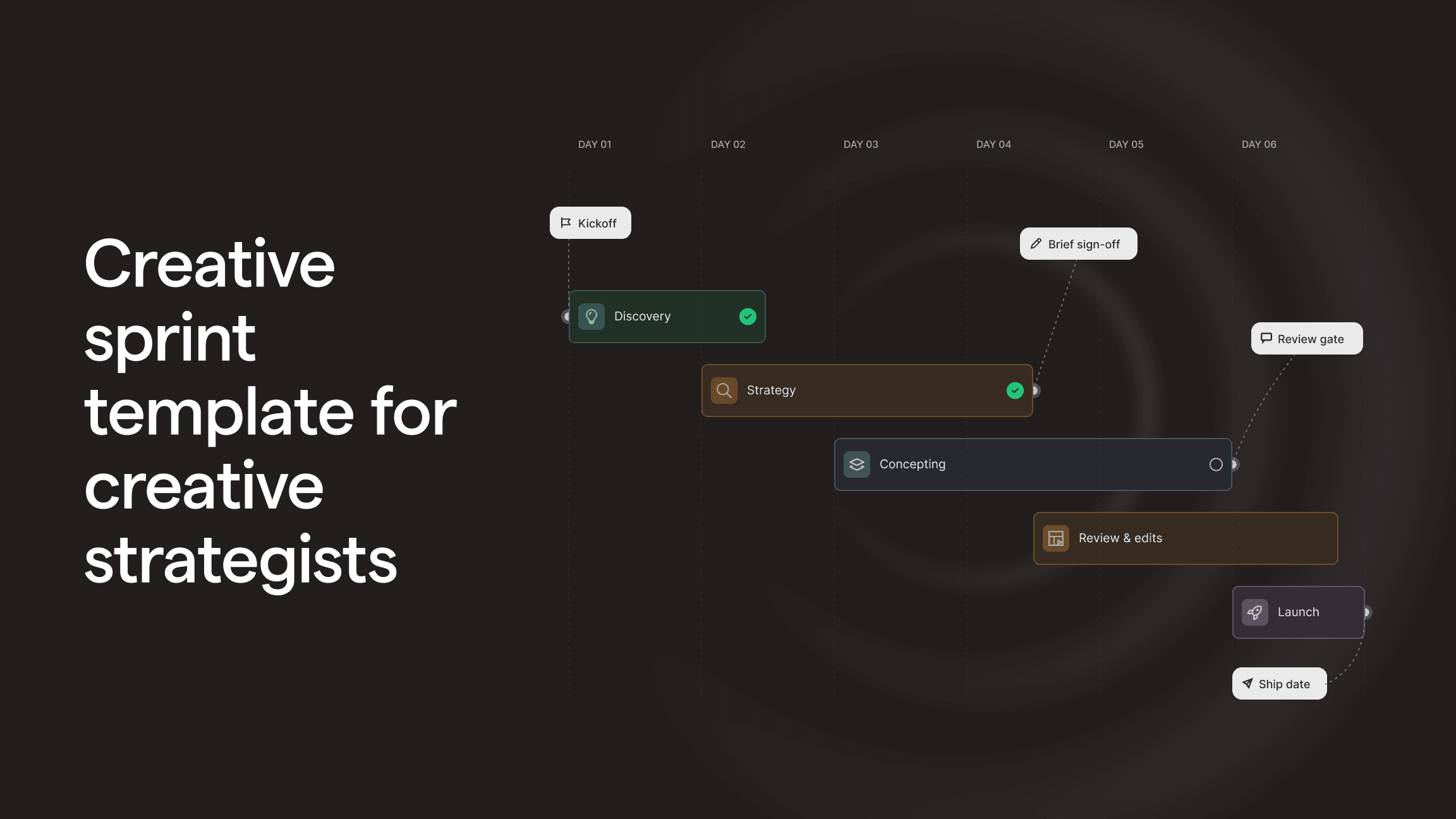
Creative Strategist Guide 2026: Role, Metrics and Tools
A comprehensive 2026 guide covering the Creative Strategist role, key performance metrics, and the tools needed to succeed.
It's Monday morning. You've got 12 briefs to write, a new UGC batch coming in from three different agencies, a media buyer pinging you about naming conventions, and somewhere in Google Drive there's a winning concept from last quarter that you need to iterate on (if you can find it).
The job posting may have promised "blending creative vision with strategy and analytics" or "owning the creative bets behind 7-9-figure monthly ad spend". The actual job is managing a high-velocity creative production process while simultaneously trying to figure out what's working and what to build next.
The Creative Strategist role has matured significantly since the early DTC years. In 2026, it's one of the most in-demand roles in performance advertising (and one of the most misunderstood). This guide breaks down what it actually involves, which metrics matter, and the tools that make the difference between a creative strategist spending their time on strategy versus admin.
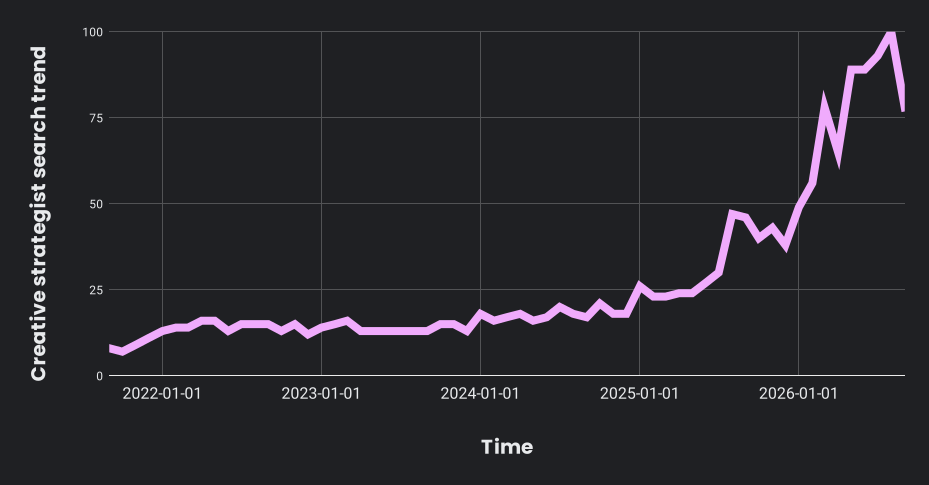
Creative strategist search trend over time. Source: Google Trends.
Want to hear how an experienced creative strategist at Granola runs performance creative operations? Register for our webinar on Thu, Sep 24 and find out.
What does a creative strategist do?
A Creative Strategist owns the connection between creative production and performance results. They're responsible for turning insights about what's working in paid advertising into briefs, concepts, and creative directions, and then making sure those creatives actually get made, reviewed, approved and launched.
In practice, that means operating across two distinct parts of the job:
The strategic half
Analyzing ad performance to identify what hooks, formats, angles and visual elements are driving results
Developing creative hypotheses and briefs based on those insights
Prioritizing what to test next given budget and production capacity
Keeping a running inventory of what concepts have been tested and what was learned
The operational half
Managing the brief-to-launch workflow across internal designers and external agencies
Keeping creative production on schedule
Organizing the asset library so the team can find and reuse what's been made
Coordinating handoffs to media buyers and making sure assets go live correctly
Most job descriptions describe the strategic half. Most of the actual working hours (up to ~80%) go to the operational half.
That's a major structural problem. And it's the number one frustration we hear from Creative Strategists at high-growth companies like DTC brands, consumer apps and mobile gaming: the admin work crowds out the strategy.
"We're staring at download and upload screens day in and day out."
Sales call quote from a Creative Strategist of a performance advertising team.
On the video below, Focal CEO Andreas discusses what a typical week can look like for a creative strategist.
Where the Creative Strategist sits in the org
The work of a Creative Strategist is actually done under different titles depending on the industry and company size. Typical job titles we see include Creative Strategist, Performance Creative Manager, Creative Producer (common in mobile gaming) or UA Creative Producer.
In smaller companies, one person carries the title and does the work described in every section below; in larger organisations, there can be several specialists.
A Creative Strategist typically reports to a Head of Growth, VP of Performance Marketing, CMO, or Creative Director. At smaller companies, this is sometimes the founder directly. Team structure varies widely.
Some Creative Strategists manage a team of in-house designers and editors.
Others are individual contributors who coordinate entirely with external agencies and freelance creators. In this case the job is closer to vendor and workflow management than people management.
They might work at a creative agency and be in charge of delivering creative to clients.
Especially in this type of setup, the work is commonly done in pods including some combination of a creative strategist, editor, creative coordinator, and graphic designer.
They might even be a contractor themselves who works part time and does work for several brands.
Here are examples of people creative strategists work with day to day and what each stakeholder needs from the strategist.
Designers and editors need clear briefs and a way to submit work and get feedback without friction.
Media buyers / UA managers need a clean, fast handoff of approved assets. The Creative Strategist in turn needs visibility into what's actually live and performing.
External creative agencies and content creators need briefs, a place to submit assets, and feedback - ideally without an email chain. With larger advertising budgets and ad volumes, it's common that brands work with multiple agencies simultaneously, which brings meaningful coordination and workflow challenges.
Company leadership cares about output volume, speed-to-launch, sales volume and ROI on creative spend, not the mechanics of how the work gets done.
Creative strategist vs. creative ops manager: why so many people do both
At most brands, a dedicated Creative Operations Manager doesn't exist. The Creative Strategist absorbs both roles and the operational work expands to fill the available time.
The distinction matters because the two jobs require different modes of thinking:
Creative Strategist mode: analyzing performance data, spotting patterns, forming hypotheses, writing briefs, evaluating creative concepts, deciding what to test next.
Creative Ops mode: managing timelines, chasing approvals, organizing files, enforcing naming conventions, coordinating agency handoffs, making sure the right assets reach the right channels.
When these two roles collapse into one person, the ops work tends to become the major timesink. It's urgent, it's visible, and there's always more of it. Strategy work is important but it can always "wait until tomorrow".
What should happen is the opposite: the teams that produce the most and see the best ad performance consistently are the ones that have built systems or adopted tools that take the ops burden off the Creative Strategist's plate.
Key skills for creative strategists in 2026
The skill set has shifted as the role has matured. In 2026, the strongest Creative Strategists combine:
1. Performance data fluency
Truly understanding performance data is not just about reading dashboards, but actually knowing which metrics predict creative performance at different stages of the funnel. You need to be able to look at a creative testing result and know what to do with it: iterate, kill or scale.
It's very important to note that for advertisers, this doesn't mean you can leave creative reporting for the Creative Strategist to "figure it out" with spreadsheets or ad platforms' native solutions. You should invest in reporting setups that allow creative strategists to analyze results faster, and connect ad performance back to hypotheses, briefs, creative assets, scripts and other creative elements, so they can optimize the advertising with each iteration and improving the performance.
2. Brief writing that survives the handoff
A brief that produces the right creative is specific: hook, visual treatment, format specs, reference assets, and, critically, what the creative needs to achieve measured against which metric. The best Creative Strategists treat brief writing as one of the highest-leverage parts of their job because it's where most production waste either happens or gets prevented.
3. Creative hypothesis thinking
Strong Creative Strategists think in testable hypotheses, they do not leave it to the level of general concepts. "We think a founder-facing UGC hook on a 15-second vertical video will outperform our existing static on mobile-first placements because of X" is a hypothesis. "Let's try something with the founder" is not.
4. Asset library management
In 2026, a well-run creative asset library is a competitive advantage. Teams that can quickly find and iterate on winning concepts from previous sprints (or seasonal sales events for example) move faster than teams that start from scratch every month. This requires both a system and the discipline to maintain it or tools that remove the maintenance burden entirely.
5. Agency coordination at scale
Most performance creative teams work with multiple external agencies and other stakeholders such as creators simultaneously. Keeping those agencies and stakeholders aligned — same briefs, same feedback process, same place to submit assets — is a full-time skill. Teams managing three or more agencies without a unified system spend a disproportionate amount of time on coordination overhead.
6. Smart use of AI tools
AI now handles a meaningful share of tagging, categorization and other tasks, and Creative Strategists are increasingly expected to prompt and direct AI-assisted workflows rather than do that work by hand. The skill isn't operating the AI or outsourcing your thinking, it's knowing what to hand off and what still needs human judgment: taste, brand fit, and whether a concept actually fits the strategy, not just whether it matches a pattern in past-performing creative.
Teams we talk to are actively asking for AI capabilities like visual analysis of ad material, contextual search and MCP support, which goes to show tooling is expe
Metrics that actually matter
Common mistakes when looking at performance metrics include optimizing creative-level metrics in isolation and focusing too much on non-critical numbers. E.g. Hook rate and CTR are diagnostic tools, not goals.
Structure how you track performance in two tiers: the business outcomes that justify the spend, and the creative diagnostics that explain why a business outcome moved. For more on the metrics that matter, see our blog article on the most essential metrics for marketers.
Tier 1: business outcomes (track these first)
Ad spend at volume with acceptable ROAS: the ability to scale spend profitably, raising the ceiling on how much you can put behind what's working, is the top-line metric everything else serves.
ROAS and MER (blended ROAS): many DTC teams steer by blended MER rather than platform-reported ROAS, because platform numbers overstate performance. Read either against margin, not just revenue.
Conversions, cost per conversion, and CAC: the actual event you're paying for (a sale, an install), and for DTC specifically, new-customer CAC.
AOV (average order value): a lever creative can move directly through offers and bundling, improving ROAS without touching CPA at all.
LTV, LTV:CAC, and payback period: the long-game economics. The ratio of how much a customer costs to acquire vs. how much they bring money to the business over the average time as a customer matters more than LTV in isolation.
If the ads aren't bringing in valuable customers at a cost that lets the business scale, nothing below this line matters yet.
Tier 2: creative diagnostics (use these to explain tier 1)
Hook rate: the percentage of viewers who watch past the first 3 seconds. Identifies headline creative failures early.
Hold rate / thumb-stop rate: a proxy for whether the creative holds attention after the hook.
CTR (click-through rate) and CVR (conversion rate): the creative's ability to drive intent and follow-through.
Creative fatigue indicators: frequency and CPM increases combined with CTR/CVR decline signal a creative has exhausted its relevant audience.
Iteration speed (the metric that doesn't appear on any dashboard)
This one predicts long-term creative performance better than any single ad result. How many new creative concepts can your team ship from brief to live ad per sprint? How fast can a winning concept get iterated into variants? Teams that move faster learn faster.
The structural bottleneck for iteration speed is almost always production ops (rather than creative quality): files in the wrong place, briefs getting lost, approvals being stuck in Slack, agencies waiting on feedback and a host of other issues typically caused by Creative Strategists and creative teams doing their work across a number of fragmented tools that may not even have been built with creative work in mind.
The operational layer determines how fast the creative layer can move, and that's why the tools creative teams use matter a lot.
Creative strategist tools in 2026
The creative strategist toolkit covers five functional areas. Here's what's worth your attention in each.
For more information on the best tools for creative strategists, see our blog on Creative Strategist tools.
1. Creative performance analytics
You need visibility into which creatives are live, which are performing, and what the data actually tells you.
Focal connects performance data directly to each asset in your library — so you don't need naming conventions as a dependency. The analytics layer lives where the files are, not in a separate platform. See how performance visibility works in Focal.
Motion is a great tool for creative analytics. Strong for identifying patterns across a large creative library. It works best when your team has consistent naming conventions in place with minimal errors. If not, the data becomes difficult to parse. Motion only handles the analytics though, it doesn't have features for creative production management.
2. Ad creative inspiration and research
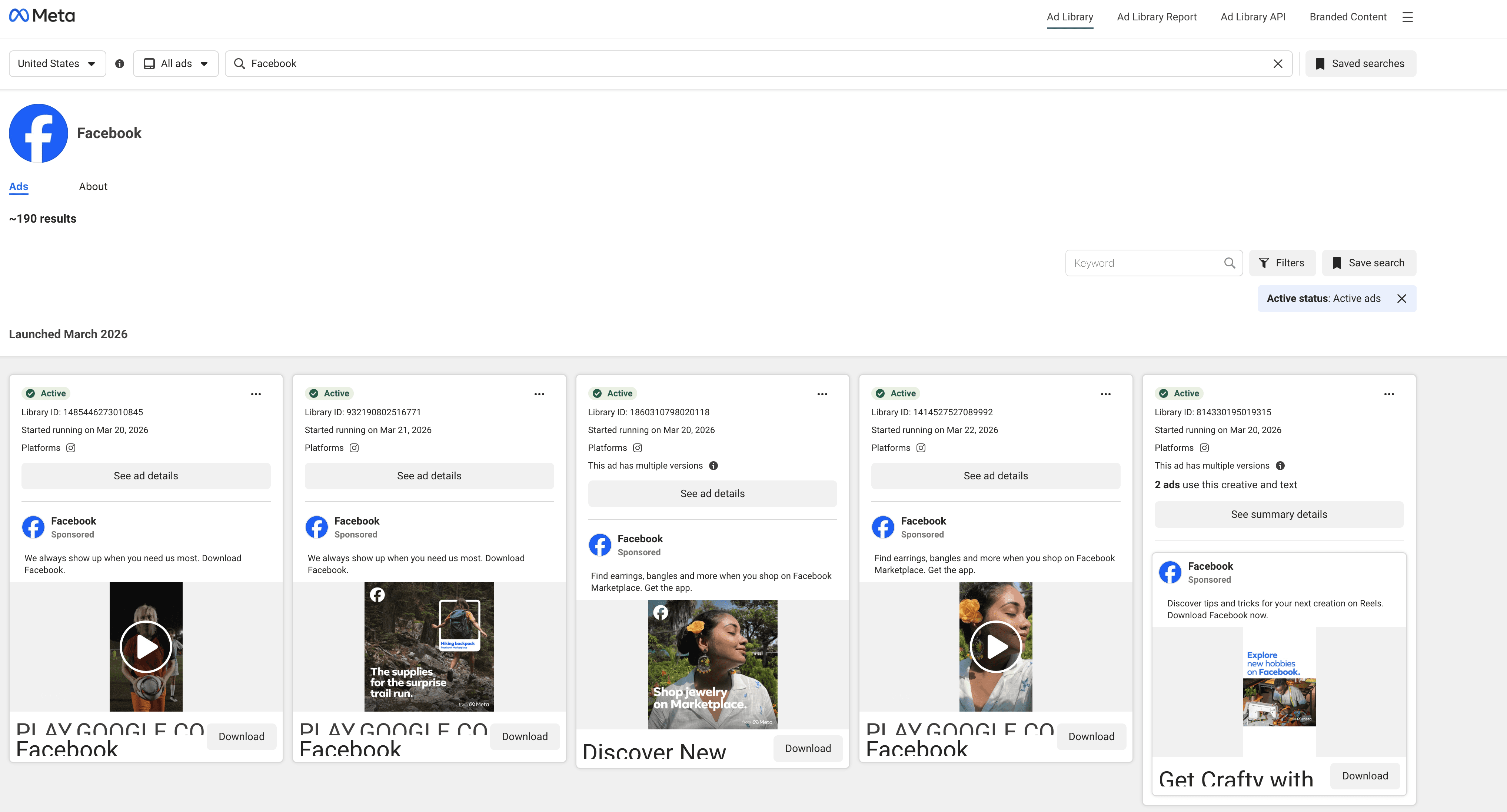
Meta Ads Library. Monitoring what competitors and other brands with similar audiences are running, and for how long, gives direct insight into what's working.
Foreplay is one of the best known swipe file tools. It lets you save and organize competitor ads for reference when briefing.
TikTok Creative Center: TikTok's own analytics tool for trending sounds, formats and top-performing ads by vertical. Worth checking before any TikTok-heavy sprint.
For additional inspiration sources including things like your own 1st party data, watch the video below.
3. Brief writing and creative development
Most teams brief in Notion, Google Docs or a dedicated section of their project management tool such as Asana or Monday. The format matters less than the completeness. A brief that arrives at an agency with missing specs or unclear success criteria wastes a production cycle.
The best briefs include: the hook, the visual direction, the format specs (aspect ratio, length, safe zones), reference examples, the KPI being optimized for, and how the asset should come back (naming convention, folder structure, file format). That last part is where most briefs fail.
4. Asset management and organization
This is where most Creative Strategists lose the most time, and where the tooling has changed most significantly.
Google Drive or Dropbox is what most teams use by default. The problems are well-documented: no search by visual content, naming conventions break constantly, there's no connection to performance data, and as the library grows finding anything becomes a manual exercise.
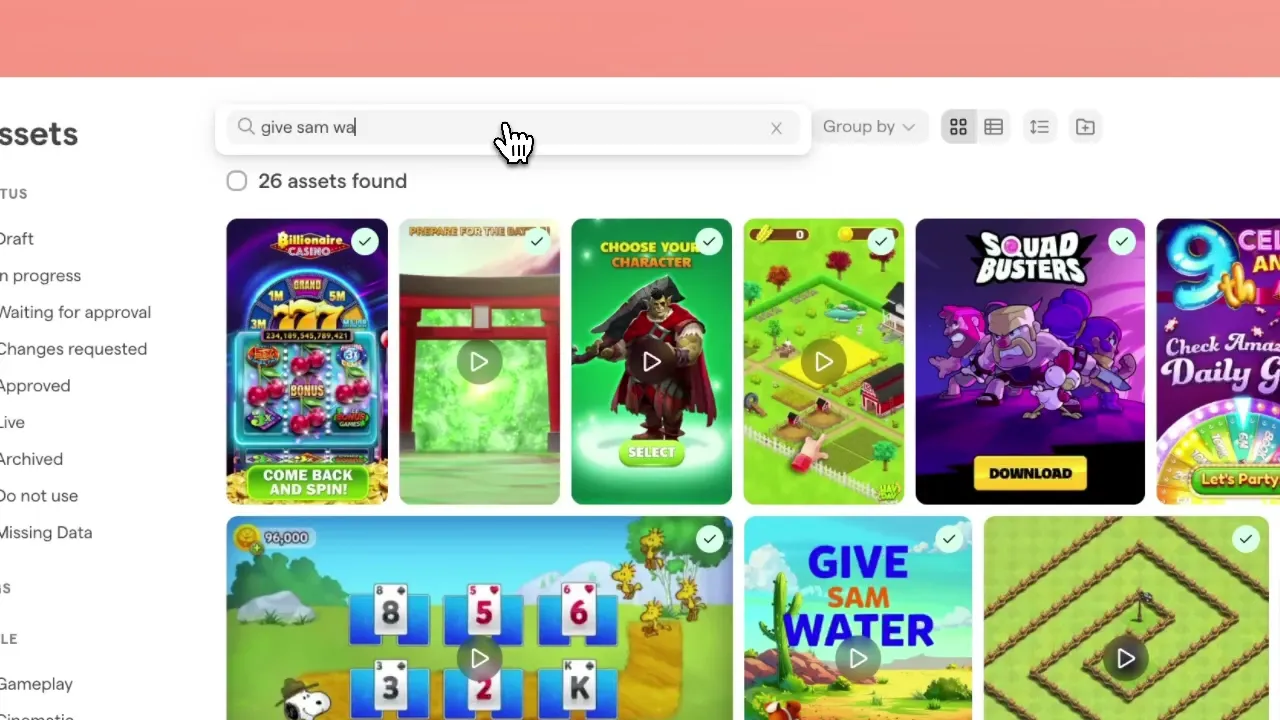
AI-powered DAM platforms like Focal automatically tag and categorize every asset on upload — by format, theme, visual elements, scene-level content in video. The library becomes searchable by what's actually in the creative, not just what someone chose to name the file. For teams managing thousands of assets across multiple agencies and channels, the difference in time spent is significant.
For more on DAM platform needs of high-volume performance creative teams, see Why Legacy DAMs Fail Performance Advertising Teams.
5. Project management and workflow
Asana and Monday.com are the most common project management tools in use. Both work reasonably well for tracking production status, but the gaps are asset storage (neither has a real file management layer) and creative review (neither handles video frame-by-frame comments or structured approval flows well).
Frame.io fills the video review gap but doesn't handle project management. Most teams end up with both, which means two tools to maintain, two places to check, and no unified view of where a creative actually is in production.
Teams that have consolidated their workflow into a platform built around performance creative covering briefing, review, asset management and ad channel uploads in one place, tend to move faster and produce more consistently. The overhead of managing multiple disconnected tools is a tax on iteration speed.
Learn how Supercell doubled their creative velocity with Focal.
6. Workflow automation
In sales conversations we've had this year, automation capabilities are becoming one of the more decisive factors in a final tooling decision. The biggest value add a Creative Strategist brings is the actual strategy (it's in the name after all): at it's most basic this means understanding what works and knowing what to produce and test next. Automation is what frees up time from the manual production operation management and frees up time for strategy so under-investing in this category doesn't make sense.
For example: manually uploading an approved asset to Meta, TikTok, or YouTube and renaming it correctly by hand doesn't take much if you have a few ad creatives. But it becomes a massive time sink when you produce hundreds of ads per month. So having a status-triggered automation do it for you seems like a small thing but can give you back hours every week.
One creative ops lead evaluating this kind of automation against a Zapier-plus-PM-tool setup put it plainly: knowing a platform has "essentially your own version of Zapier built into the platform" changes the calculus versus assembling that automation yourself. Focal's Workflows feature covers this directly, including rules that trigger on approval status and push straight to ad channels.
The admin problem: why the strategic work keeps getting deferred
A pattern we see consistently is that Creative Strategists at fast-growing brands are sharp, analytical, and good at their jobs. They know what they should be doing. The problem is the available time.
When the operational layer of the job (file management, naming, agency coordination, manual uploads) runs on manual processes, it expands. It's not that Creative Strategists lack discipline; it's that manual systems require constant attention just to maintain, let alone improve.
The teams we see producing the most are the ones where the operational layer is systematised, where AI tagging removes the manual taxonomy work, agency handoffs have a defined process and naming convention enforcement is automatic. That's what creates the space for strategy.
Peter McLaughlin, UA Creative Producer at Supercell, doubled his creative output after moving his team's workflow into Focal. The underlying reason wasn't working harder, it was removing the admin that was absorbing time that should have been on creative.
The teams that compound
There's a version of this role where every sprint feels like starting over. New briefs from scratch, assets scattered across folders, no clear picture of what last quarter's best-performing creative actually was.
And there's a version where each sprint builds on the last. The winning concept from six months ago is searchable, tagged, and ready to iterate on. Briefs reference what's been tested. The team has a growing library of knowledge about what works for their audience.
The difference is made by the systems, not the talent. The Creative Strategists who build the most consistently are the ones who treat their asset library and their workflow infrastructure as a competitive asset because over time, it is.
If you're spending more time on admin than strategy, that's not inevitable. It's a tooling problem. See how Focal gives Creative Strategists their time back. Book a demo today.
Frequently asked questions
What does a creative strategist do?
A creative strategist owns the connection between creative production and performance results in paid advertising. They develop briefs and creative directions based on performance data, manage the brief-to-launch workflow across internal teams and external agencies, and build a compounding library of tested concepts. In practice, the role splits between strategic work (analysing performance, writing briefs, forming creative hypotheses) and operational work (managing production timelines, organising assets, coordinating handoffs). Most creative strategists spend more time on operations than strategy, which is why tooling and systems matter.
Who does a creative strategist report to, and who do they work with?
Typically a Head of Growth, VP of Performance Marketing, CMO, or Creative Director, and sometimes the founder directly at smaller companies. Day to day they work with designers and editors, media buyers or UA managers, and external creative agencies. Team structure varies: some manage an in-house team, others are individual contributors coordinating entirely with external agencies and freelancers.
What's the difference between a creative strategist and a creative director?
A creative director typically owns the visual and conceptual quality of creative output, craft, brand consistency, creative standards. A creative strategist is more performance-focused: they use data to identify what creative approaches are working, brief in new directions based on those insights, and measure against performance KPIs like CPA and ROAS.
What skills does a creative strategist need in 2026?
Performance data fluency, brief writing that survives the handoff, creative hypothesis thinking, asset library management, agency coordination at scale, and increasingly, working alongside AI-assisted tagging and review without losing judgment over brand fit and strategy.
What metrics does a creative strategist track?
Two tiers: business outcomes first (ad spend at volume with acceptable ROAS, blended MER, conversions/CAC, AOV, LTV:CAC), then creative diagnostics that explain them (hook rate, hold rate, CTR, CVR, fatigue indicators). Iteration speed is a meta-metric that predicts long-term performance but doesn't show up on a dashboard.
What tools do creative strategists use?
A creative analytics platform, an ad inspiration tool, a briefing and project management tool, a digital asset management platform, a video review tool, and increasingly a workflow automation layer for channel uploads. Consolidating into fewer platforms tends to mean less time on admin.
How does a creative strategist work with creative agencies?
By briefing them, reviewing submitted assets, giving feedback, and coordinating channel delivery. The biggest challenges are alignment on brief format, visibility across in-flight work, and correct asset naming. Managing six or more agencies without a shared system routinely costs more time in coordination than in actual review.
How is AI changing the creative strategist role?
AI is absorbing a growing share of the operational side: automatic tagging, first-pass review, and on-demand access to performance history through tools like the Focal MCP. It doesn't replace judgment on brand fit or strategy; it frees up time for the strategic half of the job.