What is Performance Creative in Advertising?
Unlocking Effective Advertising: Marrying Creativity with Data.
Your creative team delivered 60 ads last sprint. The media buyer launched 40 of them. You know the ROAS on the campaign, but you have no idea which concepts actually moved the needle, which hooks worked, whether the UGC outperformed the studio footage, or what to brief next.
Performance creative is designed to fix this problem. Here's what it actually means in practice.
What performance creative is
Performance creative is ad creative where every element and production decision is treated as a variable to measure against data from ad platforms. This includes things like:
Call-to-action (CTA)
Hook: the first 3 seconds of a video
Format: video, static images, motion graphics vs. video footage
Offer: discount percentage, free gift, etc.
Opening frame
Value proposition
Visual style
Video length
That's different from traditional advertising, where creative decisions are made based on instinct, brand guidelines, or what the team thinks looks good. With performance creative, the audience tells you what works through ad spend, click-through rates, cost-per-acquisition or cost-per-install, and downstream conversion.
It's not a rejection of craft or brand judgment, but an approach where creative production is done thoughtfully, creative elements are tested systematically, and new sprints build on what the data shows.
For more on the metrics you should focus on and how to interpret them, see the creative performance KPIs that matter the most.
Maintaining the feedback loop is hard with high creative volumes
Executing a performance creative approach well is not easy, and the challenge starts from creative volumes.
Most teams are producing creative at high volume across Meta, TikTok, YouTube, and other ad platforms simultaneously, working with multiple agencies and freelancers, managing briefs and approvals across Slack threads and spreadsheets. By the time an ad is live, three or four people have touched it and nobody has a clean record of what variant it was, what concept it tested, or what went live where.
When the performance data comes back, there's nothing to connect it to. You know a campaign worked (or didn't), but you don't know why.
"My designer made 100 statics for the last sprint and I don't even know if it went live."
— Creative Strategist at a DTC brand we interviewed
Without the connection between creative and performance data you can't learn properly. You brief the next sprint from gut feel, and the cycle repeats. This is why performance creative at scale is as much a workflow problem as a creative problem.
How performance creative teams work in practice
1. Brief around hypotheses, not just deliverables
A performance creative brief doesn't just describe what to make. It has a hypothesis about what's being tested, such as:
Angle
Hook
Creative style (e.g. user-generated content vs. high production value studio footage)
Ad formats
Audience signal you're responding to
Teams that do this well document their briefs with enough specificity that when performance data comes back, they can connect the result to the decision that produced it and either reject or confirm the hypothesis.
"This concept tested a fear-of-missing-out hook against a social-proof hook" is a brief that enables learning. "Please make three video variants" is not.
2. Use naming conventions to make analysis possible
Standardized naming conventions are the foundation of any performance creative operation. Without them, you can't filter by concept or any other parameter in your ad platform, you can't answer "which hook type performs best" without manual spreadsheet work, and you can't build a library of winning creatives and learnings that actually holds up over time.
The naming convention has to be applied to all creatives before they go live. Once assets launch with inconsistent names, the analysis is compromised.
For more information, see Naming Convention Meaning: What It Is and Why It Breaks in Ad Campaigns
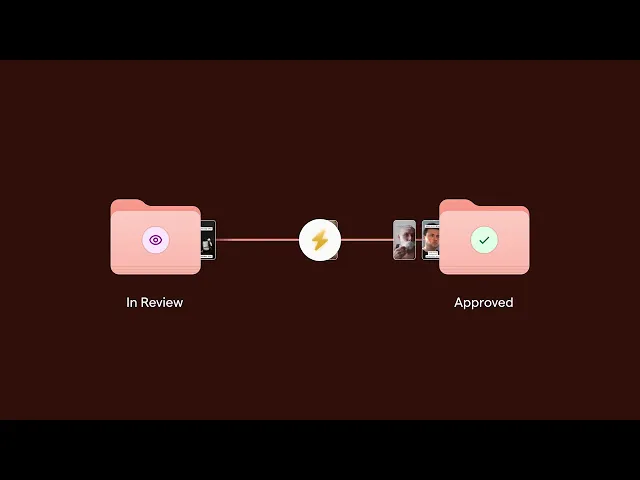
You can automate asset naming in Focal so anything that is approved follows your exact naming conventions.
3. Track what actually goes live
Tracking what actually went live vs. what was produced sounds painfully obvious, but a surprising amount of performance marketing teams struggle with it.
In high-output teams working across multiple agencies and ad accounts, it's common for creatives to be produced, uploaded, and launched without the original brief-maker ever confirming which versions went live. Weeks of production work lands in an ad account, and the creative strategist has no way to connect the results back to the original thinking.
Before you can learn from performance data, you need visibility into what was even tested.

4. Connect performance data to the asset, not just the campaign
Ad platform reporting shows campaign and ad set performance. It doesn't tell you which creative concept was responsible. Getting from "this campaign had a strong ROAS" to "video with a problem-first hook in the first three seconds outperforms product-first across all audiences" requires a layer that connects the asset to the data.
That connection is what performance creative teams are actually trying to build, yet many are struggling to get it to work.
5. Iterate and compound
The teams that get the most from performance creative aren't just testing individual ads. They're building a library of winning creatives. Every sprint adds to their understanding of what hooks work for which audiences, which formats hold attention on which platforms, which offers convert in which customer journey stages and so on.
That library compounds. A team 12 months into systematic performance creative testing is making faster, better decisions than they were at the start, not because they got more creative, but because they're building on what they already know works, and have an asset catalogue to pull from for new work.
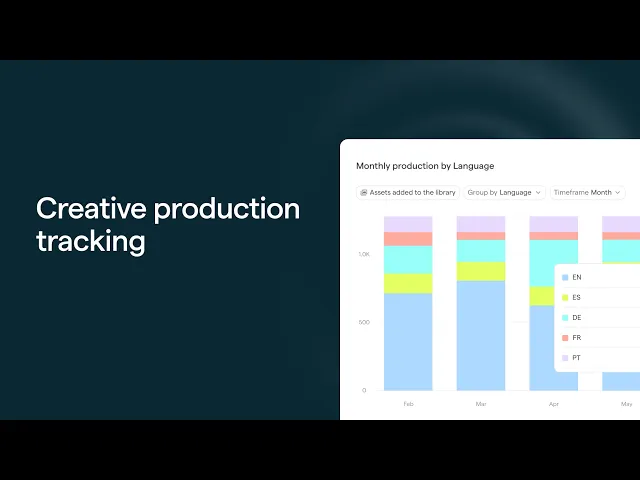
In addition to performance on creative level, Focal makes it easy to track your production process.
Winning teams are the ones who record and apply learnings
While a lone creative genious can certainly have an impact on a brand's performance, the talent is rarely the deciding factor. The difference largely comes down to infrastructure.
Teams that can't close the feedback loop from brief to production to live ad are rebuilding knowledge from scratch every sprint. They're relying on whoever remembers what was tested last time. When that person leaves, the learning leaves with them.
Teams with the infrastructure to connect creative decisions to performance outcomes build something durable. Each campaign makes the next one more efficient.
The most important parts of the infrastructure are:
Clear briefs
Consistent naming conventions
Visibility into what went live
Performance data connected to the actual assets (not just aggregated at campaign level).
The cost of not closing the loop
Every sprint where performance data doesn't feed back into the next brief is a sprint where you're starting from zero.
The teams pulling ahead in performance advertising right now aren't just producing more creative (the winners certainly do that as well), they're the ones learning faster.
Each sprint builds on the last because the connection between creative decisions and performance outcomes is documented, visible, and searchable.
That's performance creative done properly. The creative matters, and the infrastructure underneath it matters just as much.
If your team is producing performance creative at volume, the bottleneck usually isn't creative ideas — it's the workflow that should be connecting those ideas to outcomes.
Book a demo to see how Focal connects your creative production to performance data, from brief to launch to results.
Performance creative: key terms
Hook: The opening 1–3 seconds of a video ad. The creative element with the highest impact on whether someone keeps watching. Tested across different styles: problem-first, question-based, social proof, pattern interrupt.
Angle: The core argument or emotional appeal in an ad. "This product saves you time" is a different angle from "this product makes you feel confident." Performance creative teams test multiple angles to find which resonates with specific audiences.
Creative fatigue: The drop in ad performance that occurs when an audience has seen the same creative too many times. Performance creative teams monitor for fatigue signals (rising CPM, falling CTR) and rotate creative proactively.
Naming convention: A standardized system for naming ad files and campaign elements so teams can filter and analyze by creative variable. Without naming conventions, performance data can't be mapped back to creative decisions.
UGC (user-generated content): Ad creative produced in the style of organic social content typically featuring real users, candid framing, and direct-to-camera delivery. Often tested against studio-produced creative to assess format performance.
Creative testing: The practice of running multiple ad variants simultaneously to identify which performs best against a target metric (CPA, CTR, ROAS). Performance creative teams run structured tests, not random variation.
FAQ
What's the difference between performance creative and brand creative?
Brand creative prioritizes consistency, aesthetics, and long-term brand associations. It's measured by recall and sentiment, not CPA. Performance creative prioritizes measurable outcomes: click-through rate, cost per acquisition, ROAS. In practice, the best performance creative maintains brand voice while being engineered for direct response. The two aren't mutually exclusive, but the decision criteria are different.
What does a performance creative team actually do?
A performance creative team bridges the gap between creative production and media performance. They write and manage briefs, coordinate with designers, videographers, and external agencies, manage the approval and delivery of assets to ad platforms, and analyse performance data to inform the next round of production. Creative Strategists and Performance Creative Managers are the most common roles at the centre of this function.
How do you measure performance creative?
The core metrics are ad spend, CPA (cost per acquisition), CPI (cost per install), CTR (click-through rate), CPM (cost per thousand impressions), and ROAS (return on ad spend). Beyond those, teams track hook rate (the percentage of viewers who watch past the first three seconds of a video), hold rate (percentage who watch 25–75% of the video), and conversion rate from landing page. Which metric matters most depends on the campaign objective and funnel stage.
What's a creative framework and do you need one?
A creative framework is a structured approach to generating and testing ad concepts. Common frameworks organise production around angles (what's the core message), formats (video, static, UGC), and hooks (how the ad opens). Having a framework means every sprint is testing something specific rather than producing variation for its own sake. Teams running more than 50–100 active ads benefit significantly from a structured framework — without one, creative testing becomes noise rather than signal.
How does naming convention relate to performance creative analysis?
Naming conventions are what make performance data useful at the creative level. If your ads are named `final_v3_use-this.mp4`, you can't filter by concept type, hook style, or format in your reporting. If they're named following a consistent structure (e.g. `[brand]_[concept]_[hook-type]_[format]_[date]`), you can answer "which hook type has the lowest CPA across all campaigns" in minutes instead of hours. Most teams know they need better naming conventions. The ones that actually enforce them do it with tooling, not willpower.
What tools do performance creative teams use?
Most performance creative teams use a combination of: ad platforms (Meta Ads Manager, TikTok Ads, YouTube), a project management tool (Asana, Monday.com), file storage (Google Drive, Dropbox), a review tool (Frame.io, Slack), and sometimes a creative analytics tool (Motion, Superads). The problem is that none of these tools connect to each other — briefs live in one place, assets in another, performance data in a third. Focal replaces this stack with one platform that manages briefing, asset organisation, channel delivery, and performance data in the same place.