Best DAM Platforms for Marketing Teams in 2026
Compare the best DAM platforms for marketing teams in 2026 — mapped to your use case, from enterprise brand governance to performance advertising.
You search "best DAM platforms for marketing teams." What comes back is Bynder, Canto or Adobe Experience Manager. Articles referencing enterprise automotive companies managing approved brand assets across 40 markets that need digital rights expiry policies and brand portal governance.
These are great products if those are your specific use cases. But if you're a creative strategist in a performance marketing org producing 100 new ad creatives a month into a shared Drive with no consistent naming, you need something else entirely.
"Digital Asset Management" or "DAM" is one category name applied to very different platforms that were built for very different use cases. Before comparing feature lists, the right question is what kind of creative work you're running, because the answer determines which tool actually fits.
The four questions that determine which DAM platform fits your marketing team
What types of assets are you primarily managing?
Logos, brand templates, presentation decks, PDFs, and approved campaign imagery are a fundamentally different management problem from ad creative video and statics produced at volume for paid social.
Most DAMs were built around the first type. The metadata models, approval logic, and distribution workflows are designed for managed brand assets with long shelf lives, not for running 400 new creatives a month through a multi-agency production cycle.
How much creative are you producing, and how fast?
A brand team at a global company might add dozens of approved assets to a library per quarter. A performance advertising team at a DTC brand might produce 400 new ad creatives per month across three agencies and five formats. The volume and velocity are an order of magnitude apart. A tool built for the first use case will break under the second.
Who needs access: internal team only, or multiple external agencies?
Brand governance platforms are typically built for internal teams and vetted external partners accessing approved materials. Performance creative teams are often running simultaneous briefing, production, and review cycles with multiple production partners at once (creative agencies, creators, etc.). That requires a different access model where agencies can work on their specific briefs and submit their work without seeing everything else.
What are the performance indicators for your managed assets?
For a brand team, "performance" means brand consistency, asset compliance, and making sure nothing off-brand goes live. For a performance advertising team, it means ad spend, CPA, and knowing which creative concepts drove results last month so next month's sprint can be adapted.
Historically, performance data in a DAM context has meant how many times a specific asset has been downloaded or which specific people logged in to view it. If you need to close the loop between your ad creative and your paid social data, that's a specific requirement that most DAMs don't address at all.
With those variables in mind, here's how the main use cases map to available software platforms.
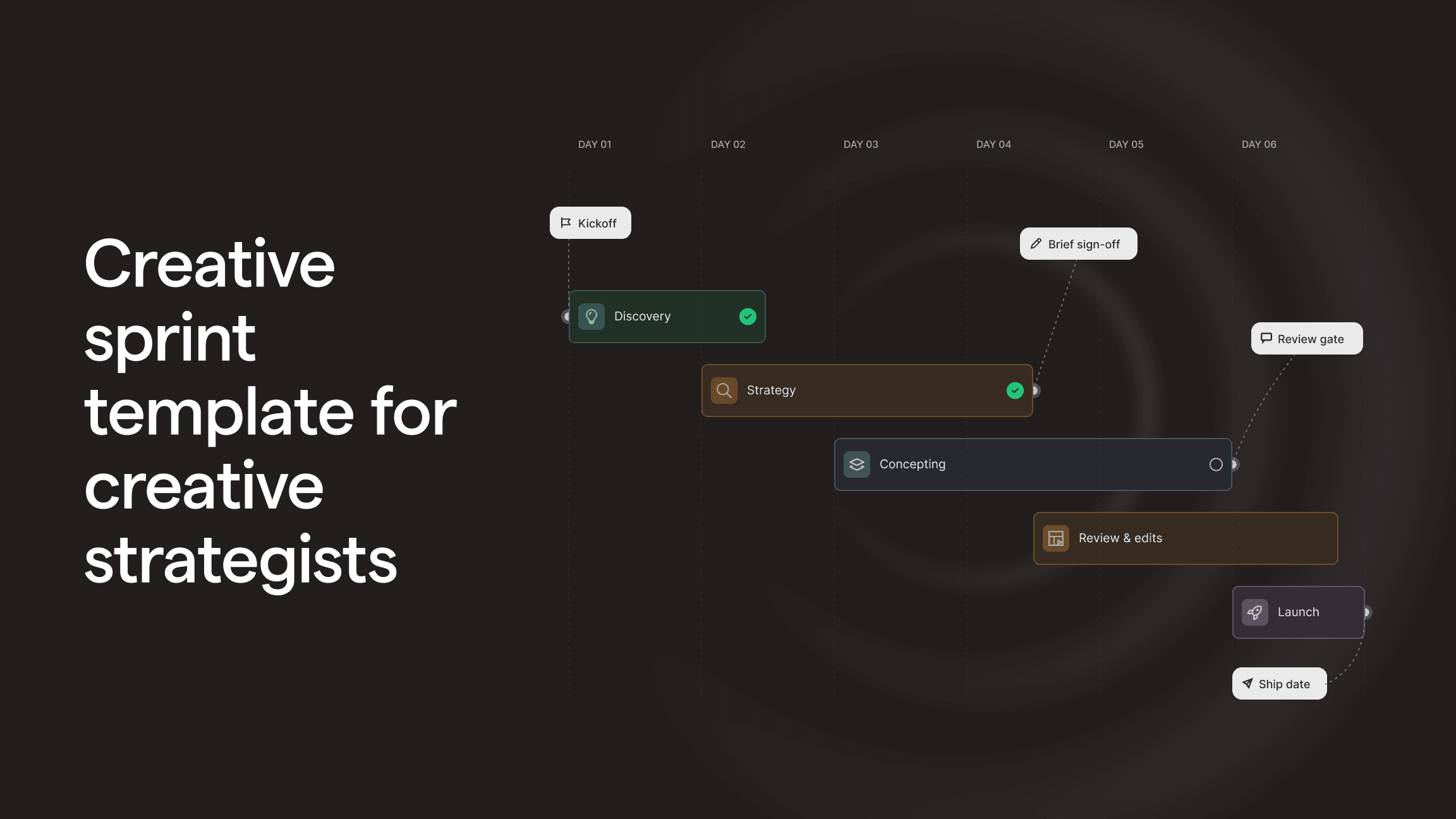
For performance marketing teams: Focal
Who is Focal best for?
DTC and ecommerce brands, consumer apps and mobile gaming companies producing high volumes of ad creative. Teams spending six figures or more on paid social per month, working with multiple in-house designers and/or creative agencies, and running active creative testing across Meta, TikTok and YouTube.
Why?
Focal is the DAM specifically built for the needs of performance advertising and growth teams. The platform covers the full creative lifecycle from brief to launch and beyond: briefing, production tracking, review and approval, asset management, channel delivery, and performance data connected to every asset.
Focal also offers unlimited seats even at the lower level plans, making it a great choice for rapidly-growing companies and anyone working with multiple external partners who might also benefit from platform access.
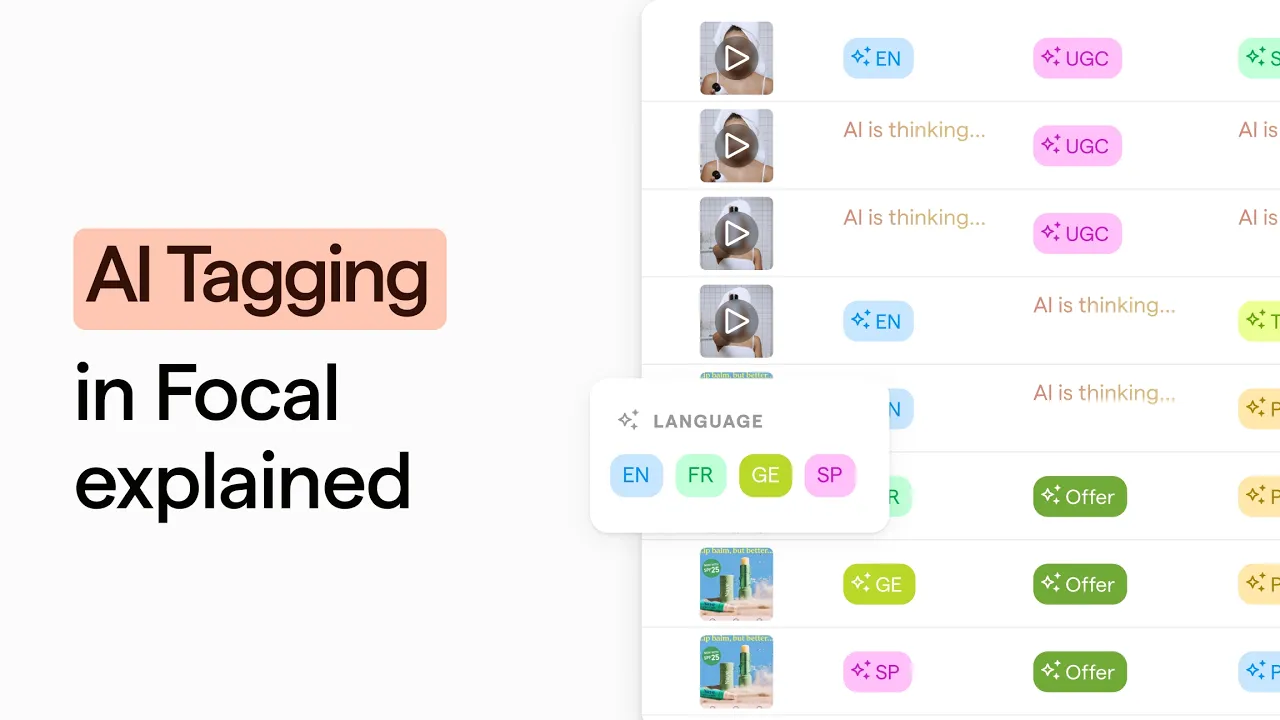
AI tagging is automatic on upload. The system reads visual content such as themes, formats and on-screen elements without any manual configuration per batch or per asset. For video, it analyses frame by frame. A creative strategist working with 18,000 assets across multiple agencies doesn't have to hire someone to tag them, and doesn't have to rely on personal judgment calls about what a tag means.
Performance data is connected directly to assets, without a naming convention dependency. That matters because most tools that show performance data are analytics layers sitting separately from the asset library and they only work if your naming conventions were consistent enough to match ad data back to creative. If they weren't, the data is useless. Focal connects the performance signal to the actual file, so the entire team (designers, strategists, media buyers and everyone else) can see what's working from the same place.
Direct integrations with Meta, TikTok, and YouTube mean approved assets push to ad platforms without manual uploads. Naming conventions enforce automatically. The multi-agency model gives external agencies access to their specific briefs and assets without exposing the broader library.
Tom van der Kolk, Co-Founder of The Longevity Store describes how Focal helped them scale their advertising to support business growth: "We cut copy prep time per ad by roughly half. We comfortably ship 20-40+ concept variations per two-week sprint, which would have been a stretch before. Translation cycle time has also gone from around a week to a couple of days."
The distinction between performance creative and brand governance comes up consistently in how teams describe their current setups. Teams that already have an enterprise DAM in place often run performance creative production in a completely separate workflow using Drive folders, Slack threads and general project management tools, because the DAM wasn't built for production at that velocity.
"We have all our assets in Bynder but they're more the brand assets... we wouldn't host everything created by the performance teams," is how one marketing team at a large consumer company put it. The production workflow problem exists alongside the governance tool. It's the exact problem Focal is built to solve.
A Focal review excerpt from G2.

Where does Focal fall short?
Focal is built with performance advertising, not brand governance in mind. If your primary need is rights management, digital rights expiry, publishing brand guidelines to external partners, or managing a brand portal for a large enterprise, Focal isn't the best fit. The platform is optimised for brief-to-launch creative production at high velocity, not for brand identity distribution at enterprise scale.
Bottom line: The right choice when creative velocity, multi-stakeholder workflows, and performance visibility are the primary problems.
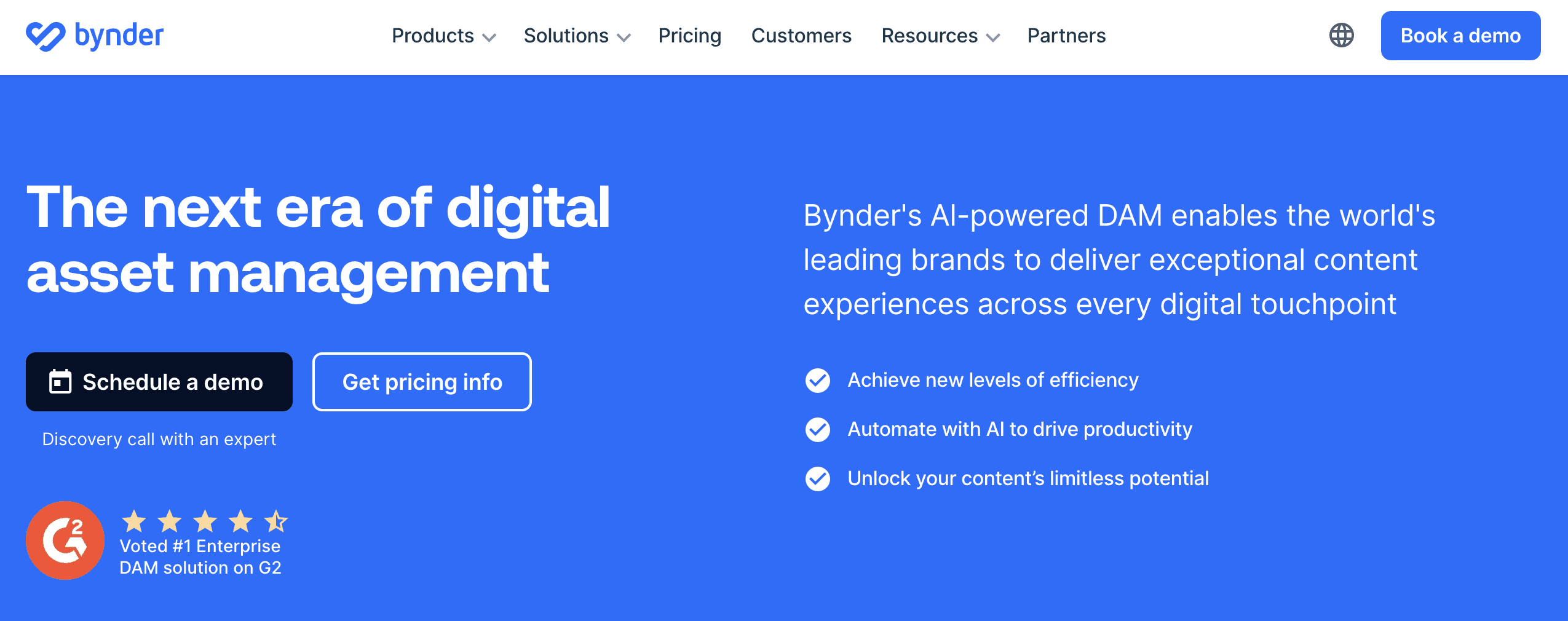
For enterprise brand governance: Bynder
Best for:
Marketing teams at large organizations managing approved brand assets across multiple markets, regions, and channels with strict rights management, compliance, and brand consistency requirements.
Why?
Bynder, Canto, and Frontify are serious platforms built to solve a real problem. That problem is brand governance at enterprise scale, and Bynder is the market leader in that space. It has Gartner Magic Quadrant recognition, strong integrations with enterprise martech stacks, and a mature feature set for managing the approved asset lifecycle.
What it does well: brand portal management, rights management with expiry and usage restrictions, enterprise-grade security and compliance, approvals workflows for brand-approved materials, and distribution to external partners and agencies at scale.
Where does Bynder fall short?
It was built for brand governance, not production velocity. The workflow logic maps to managing and distributing approved assets, not running creative production cycles across multiple agencies and other production partners at high volume.
AI tagging exists on the platform but is typically locked behind enterprise tier pricing. There are no native integrations with paid social channels — no direct push to Meta, TikTok, or YouTube.
Performance data connected to assets is not part of the core product. For a performance advertising team producing and testing hundreds of new creatives per month, the workflow doesn't fit, and the pricing structure for the features that would help tends to make the mismatch more expensive.
Bottom line: Bynder is the right choice when brand consistency, rights management, and enterprise compliance are the primary requirements. If you're running a global brand team for a large organisation, Bynder is great. If you're a performance creative team at a DTC brand or mobile gaming company, you'll be paying for governance features you don't need and missing production workflow features you do.
Also worth considering:
Brandfolder (part of Smartsheet): strong usability and brand portal features at a slightly lower price point than Bynder; used by Autodesk, Lyft and Mastercard. A good fit for mid-market organisations that find Bynder's enterprise scope more than they need.
Acquia DAM(formerly Widen): enterprise-grade metadata management with 200+ integrations; particularly strong if your organisation is already running on Acquia or Drupal infrastructure.
MediaValet: built on Microsoft Azure, well-suited to teams with large video libraries that need CDN-powered global asset distribution.
Small creative teams and startups: Tagbox
Best for:
Small businesses and event companies that need AI-powered media library organization such as photo collections, video archives, and general creative assets that need to be searchable by visual content without manual tagging.
Why?
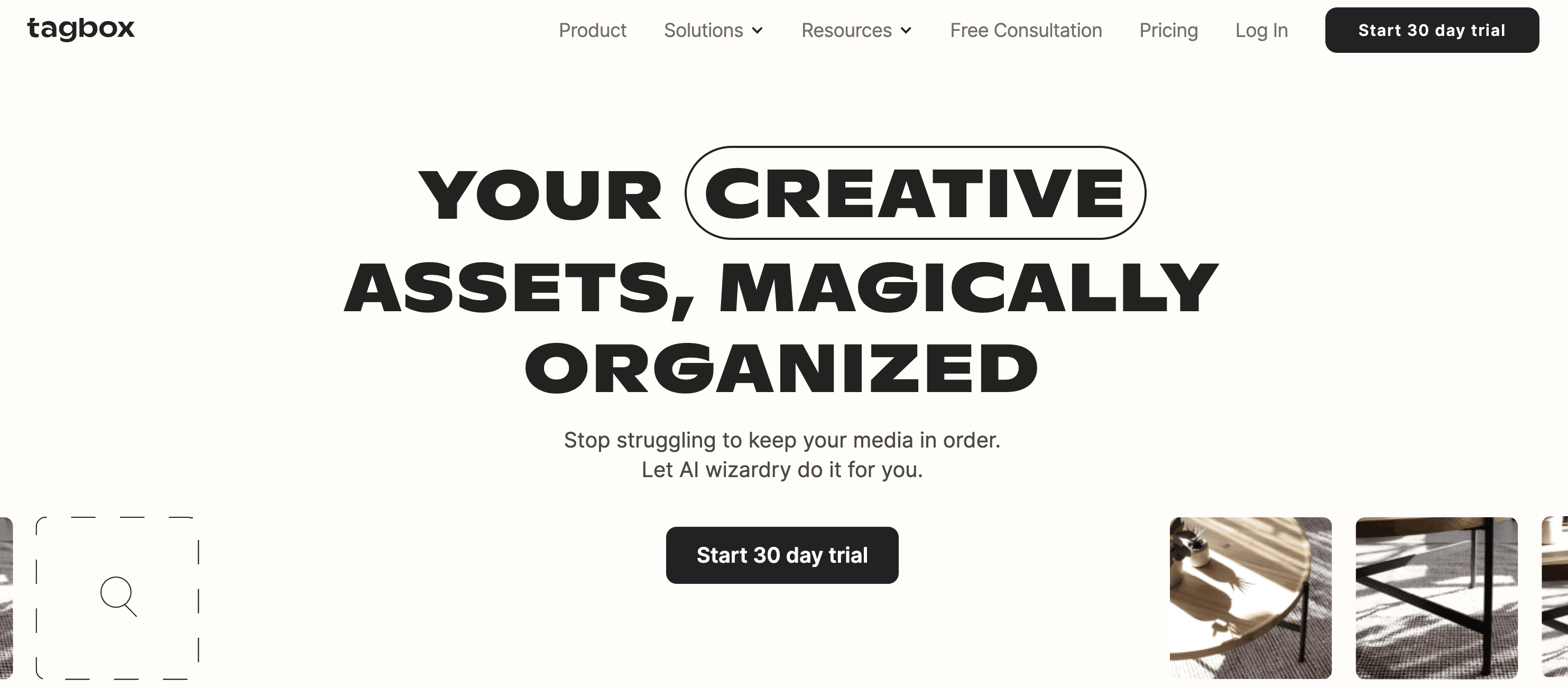
Tagbox is an AI-powered DAM built around media library discoverability. AI tagging applies automatically on upload, reading visual content to identify people, objects, scenes, and themes. Face recognition, deep image search, and logo detection make large photo and video libraries navigable without anyone maintaining a manual taxonomy. The pricing is accessible compared to enterprise DAM platforms, and setup is designed for smaller teams. Customers include Sundance Film Festival and a range of events, hospitality, and creative agency teams.
Where does Tagbox fall short?
Tagbox was built for media organisation, not for performance advertising production workflows. There are no native integrations with Meta, TikTok, or YouTube. There's no brief-to-launch workflow, no multi-agency production management, and no ad platform performance data connected to assets. For teams running paid social creative at volume, the missing workflow layers are significant. The platform solves the storage and search problem. It doesn't solve the production, review, delivery, or performance visibility problems.
Bottom line: A strong option for small creative teams and businesses that need AI-organised media libraries without the overhead of enterprise DAM pricing. Not suited to performance advertising production workflows.
Also worth considering:
Dash: clean, intuitive DAM built specifically for small-to-mid-sized teams; simpler pricing and strong for file organisation, tagging, and external sharing without the seat-count cost jump.
Lingo: combines asset management with brand guidelines and public or private portals in one place; worth considering if your team needs brand context alongside asset storage, not just a visual library.
For mid-market brand management: Canto
Best for:
Mid-market marketing teams that need structured, searchable brand asset storage such as retail, manufacturing, technology and healthcare organizations managing a library of approved brand materials across internal teams and external collaborators.
Why?
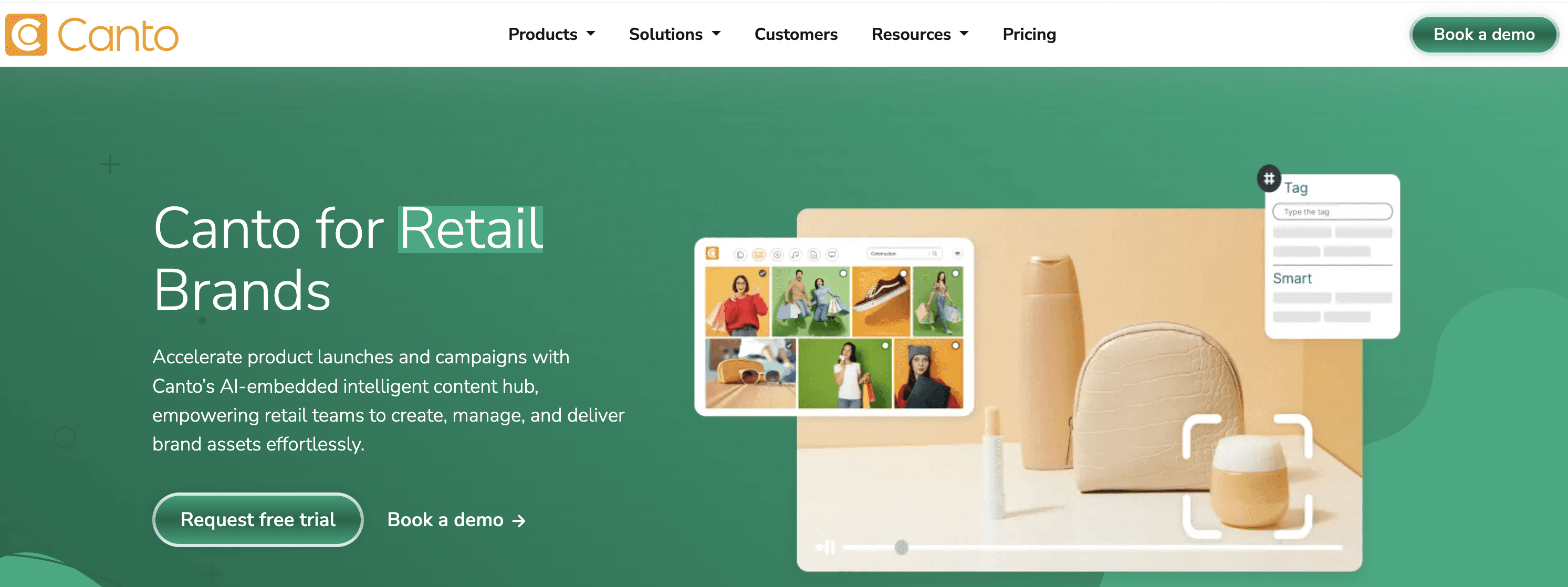
Canto solves the core DAM problem - assets scattered across shared drives, no consistent structure and difficulty finding what you're looking for - with solid metadata management, reliable search, and portal sharing for external partners. It's used by 4,000+ organisations across a range of industries and has a strong reputation for customer support and onboarding.
Where does Canto fall short?
The UI is a recurring complaint in user reviews, described as clunky and hard to navigate, particularly as asset libraries grow. Large file uploads are slow, sometimes taking hours. Pricing is custom-quote only, with no public pricing available.
AI tagging capabilities are less advanced than newer platforms. The platform is built for brand asset storage and retrieval, not for running creative production cycles across multiple agencies at scale. It's also not well-suited to very small teams — the structure and setup overhead makes more sense at mid-market scale.
Bottom line: The right choice for mid-market organizations that need structured, searchable brand asset storage and external sharing.
Brand portals and design systems: Frontify
Best for:
Organisations that need a brand portal — a central place to publish brand guidelines, share approved assets with external partners, and ensure brand consistency across every touchpoint.
Why?
Frontify is a brand publishing platform. Its core job is making sure that any external partner, agency, or internal team member working with your brand has access to the correct assets and the correct guidelines for using them. It does that well. Brand guideline management, design system documentation, and partner portals are mature, well-designed features. Especially the portal features offer a lot of customizations.
Where Frontify falls short:
It's a brand publishing platform, not a creative production platform. If you're producing ad creatives at volume and need a workflow from brief to channel launch, Frontify covers almost none of that.
There's no brief-to-launch workflow, no paid social integrations, no performance data, no multi-agency production management. User management is also a genuine friction point — adding users has to be done at the individual project or library level rather than at the account level, which becomes tedious at any meaningful scale.
Bottom line: The right choice when the primary job is managing and distributing brand identity assets to partners and internal teams.
Also worth considering:
Papirfly: brand portal plus template-based content creation; distributed marketing teams can produce on-brand materials from locked templates without involving design, which Frontify doesn't offer at the same depth.
Lytho: sits at the intersection of brand management and creative ops, combining DAM, brand guidelines, smart templates, and workflow automation; worth considering if you need more production capability alongside the brand portal.
How to choose
Six questions worth answering before you book a demo with anyone.
What types of assets are you primarily producing?
A library of logos, brand templates, presentation decks, PDFs, and approved campaign imagery is a fundamentally different management problem from 400 ad creatives per month produced across three agencies in three different video formats. Brand governance DAMs are built around the first — the metadata models, approval logic, and distribution workflows are designed for managed brand assets with long shelf lives. Performance creative workflows are built around rapid ingestion, AI tagging at volume, brief-to-launch tracking, and channel delivery. If your primary asset type is ad creative destined for paid social, filter your shortlist to platforms built for that specific problem.
Are you managing creative production or creative distribution?
If the core job is producing new ad creatives from brief to live at high volume, you need a production workflow tool. If the core job is managing and distributing already-approved brand assets, you need a DAM built for governance and distribution. Most of the tools in this article are built for one or the other, not both.
What's your creative velocity?
If you're producing fewer than 50 new creatives per month and working with one internal team, most DAMs will cover you. If you're above 100 new creatives per month across multiple agencies and formats, the manual workflow assumptions built into most platforms will start to break.
Do you need performance data to live next to your assets?
If your creative team and media buying team need to be aligned on what's actually working and if that visibility needs to live in the same place as the files, that's a specific requirement. Most DAMs don't address it. Filter your shortlist accordingly.
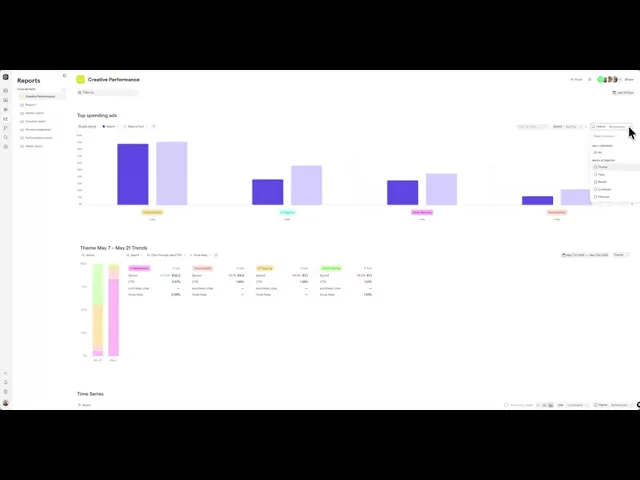
Focal combines performance data with each creative asset natively, not just based on filenames.
Do you need rights management, usage restrictions, or legal approvals?
Licensed imagery, talent rights, geographic usage restrictions, and expiry-based access controls are enterprise governance requirements. Bynder handles this well — it's a core part of what the platform was built for. Performance advertising tools don't prioritise it because most ad creative is produced under work-for-hire arrangements or in-house. If rights management is a hard requirement, it narrows the field to enterprise governance DAMs quickly.
Who needs access?
If you're managing relationships with three or more creative agencies simultaneously, each with their own briefs and deliverables, you need a platform with a multi-agency access model built for that. Shared Drive folders and email chains work until they don't.
It also worth checking what kind of pricing model different providers offer. For anyone who needs a lot of users, per seat pricing can quickly become fairly expensive.
Where to learn more
For a deeper breakdown of what to look for specifically in a DAM built for paid social creative workflows, the DAM tools guide for performance advertising covers each requirement in more detail.
If you're a performance advertising team — running 100+ new creatives per month, working with multiple agencies, spending six figures and beyond a month on paid social, Focal is built for your specific workflow.