What an analysis of 3,093 DTC supplement creatives showed us
We analyzed 3,093 DTC supplement ad creatives across 1000+ ads from 37 brands. Here's what they lean on most heavily.
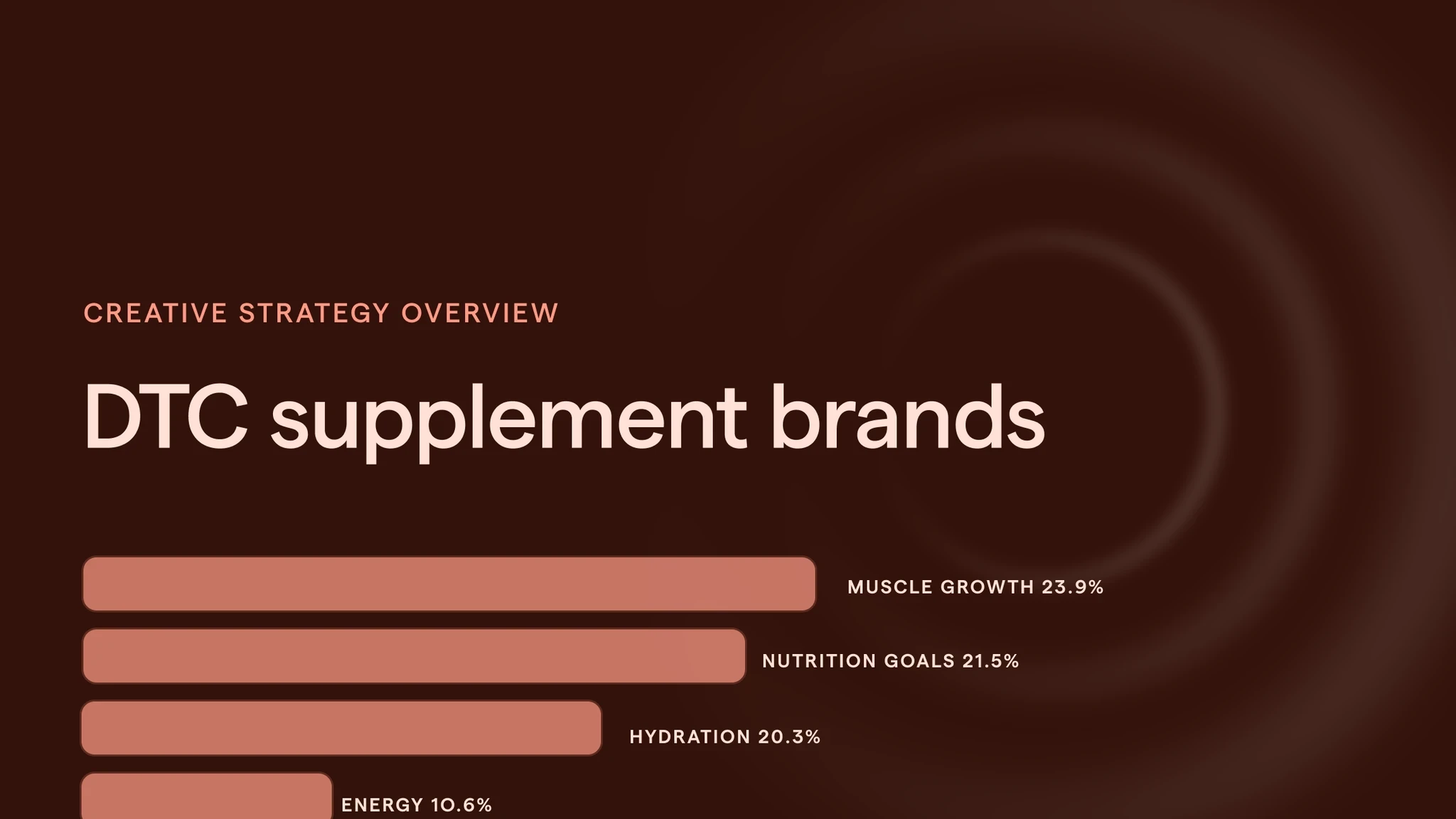
We analyzed 3,093 live Meta ad creatives from 37 DTC supplement brands. Muscle growth, energy, hydration, sleep, gut health, most of the shelf.
We didn't skim screenshots or just ask Claude to analyze things via Meta MCP, which doesn't look at visual content, only ad text fields and metadata. The analysis was done looking at audio tracks, metadata, and visual content frame by frame: who's on camera, what the hook is doing, whether there's a promo, what the ad is actually claiming and more.
The biggest thing that stood out was that only about 2% of those ads cite concrete proof to back up a health claim: a real study, named medical practitioner, dermatologist or actual certification. In a category that is basically 100% health claims, almost nobody shows their work.
This can of course be due to several reasons such as limited long-term studies existing, trying to be careful of getting flag as medical advertising on Meta (which is limited), and others, but it presents an interesting opportunity gap none the less.
So what are 98% of ads doing instead? Leaning hard on two things: the hook and the value prop.
Curiosity gap is the single most common hook mechanic in the whole dataset, ahead of social proof and authority combined. "The craziest thing about creatine," "what nobody tells you about magnesium," that shape of opener (here's an example ad). It doesn't need a study behind it. It just needs the first three seconds to work.
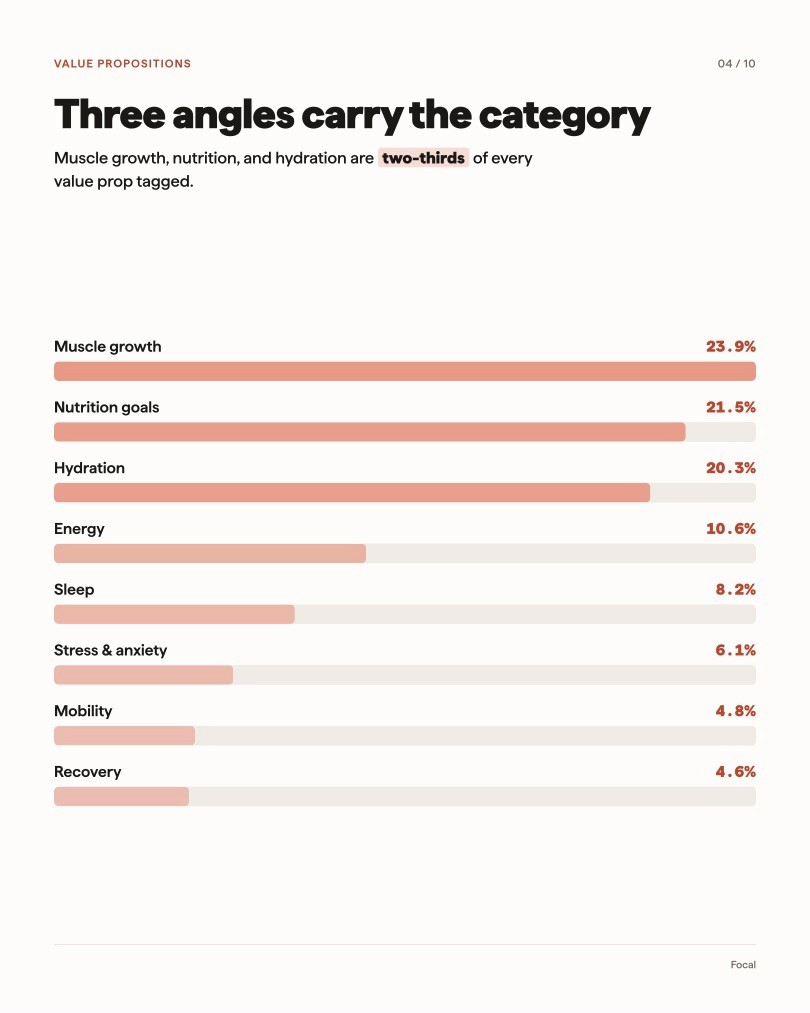
Once the hook lands, the value prop doing the selling is almost always one of three things: muscle growth, general nutrition, or hydration. Those three alone account for two-thirds of every value prop we tagged. Sleep, stress, recovery, and mobility are real angles in this category, but they're a distant second tier, mostly carried by a handful of specialist brands rather than the category at large.
This category sells on hook plus benefit. Benefit-forward messaging clearly works well, but it also means a brand willing to actually cite something real would be standing almost alone in a very crowded room.
The full breakdown report is now available. It includes format mix, talent and casting patterns, how promos actually get used and which hooks dominate by brand, across all 37 brands. You can find it here.
Supplements is just the first category we're doing this for. Keep an eye out on the next report!