
Creative sprint template for creative strategists
A sprint template for creative strategists: a weekly cadence, two-week main and off weeks, monthly creator briefs, retros and what to report when.
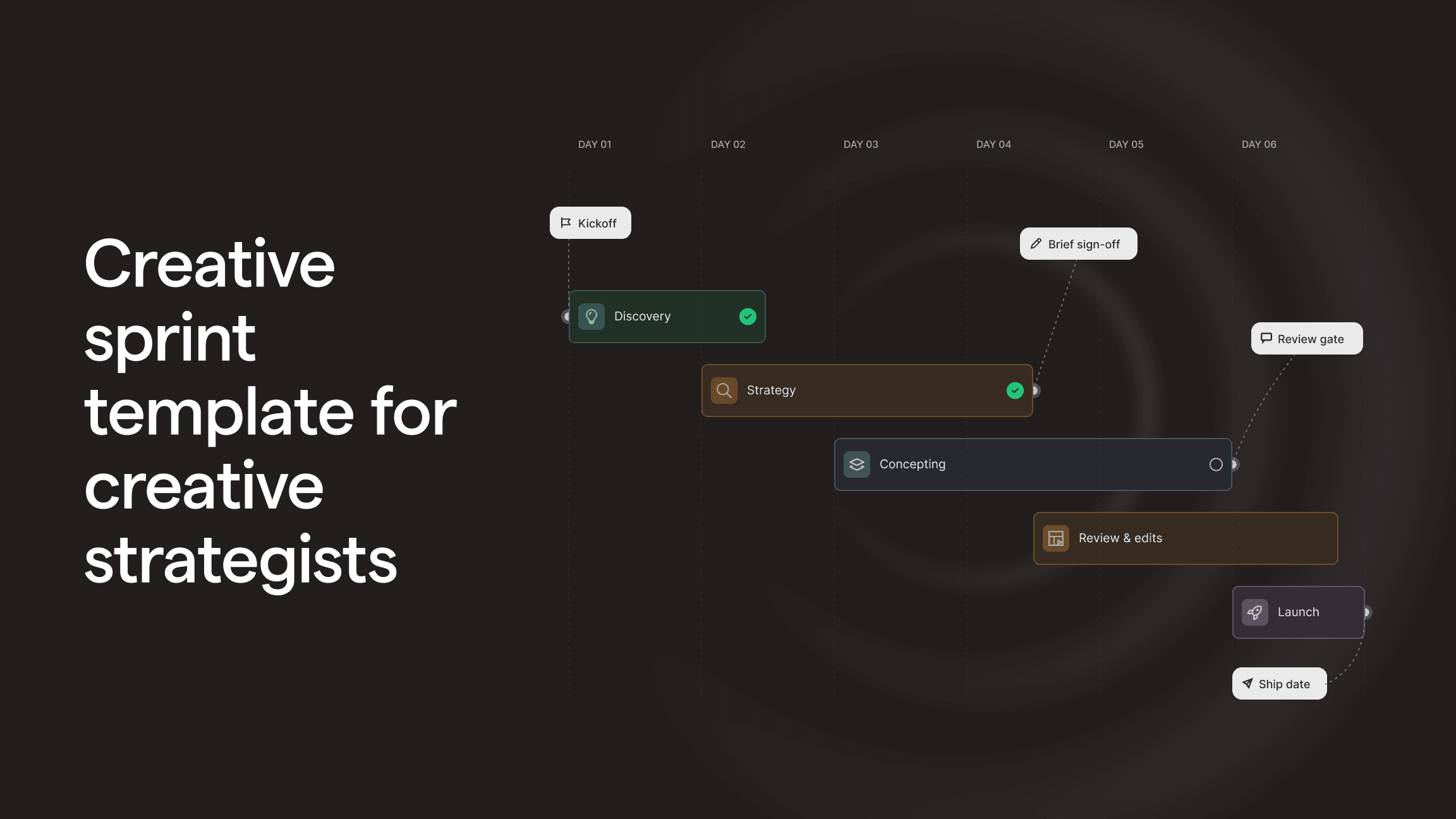
One of the most important elements for running a successful performance creative operation is structure. If you lack discipline, your creative production pipeline can easily stall. And when production slows down, so do sales when your winning concepts and creatives fatigue with nothing to replace them.
One great way to ensure you maintain discipline is to run creative production in sprints. But how should you structure them in practice?
This creative sprint template is built for performance creative strategists running paid social with a mix of in-house designers, freelancers, agencies and creators. It covers the weekly routines over a two-week sprint, a monthly cadence for creators and retros, plus what to report at each step. Copy it, then adjust it to your team.
Click here to download this template as a Google Sheet.
The creative sprint template
Cadence | What happens | Who's involved | Output |
|---|---|---|---|
Weekly: first half | Analyze last week's performance, check in with sources on what's working, plan next week | Strategist, media buyer, agencies, freelancers | Weekly creative report, priorities for the week |
Weekly: second half | Protected time for briefing and generating new creative ideas | Strategist | Briefs for the next batch |
Sprint week 1 (main week) | Plan and brief a new batch: big ideas, new concepts, wild cards | Strategist, designers, editors, agencies | New batch in production |
Sprint week 2 (off week) | Iterations only, deep dive on what the last batch and wild cards showed | Strategist, designers, editors | Iterations, batch ready to launch |
End of sprint | Batch launch | Strategist, media buyer | Creatives live, correctly named |
Monthly | Creator and agency briefs, each tied to an archetype | Strategist, creators, partnership agency | Monthly creator briefs |
Monthly | Creative retro | Strategist, key stakeholders, designers, editors, agencies | Hypotheses and ideas for next month |
Monthly | Deep reporting by archetype, motivator, format and source | Strategist, growth lead | Monthly creative report |
The weekly cadence
A creative strategist's weekly routine splits the week into two halves.
Monday to midweek: data and stakeholders. Start by analysing how last week's creatives performed and how each source is doing, whether that's creators, an agency or freelancers. Then talk to the right people about what's performing, what isn't and what the plan is for next week.
Midweek to Friday: briefing and ideas. Protect Wednesday, Thursday and Friday for briefing and creating content for the next week. Ideally you're working two weeks ahead. In practice you often won't be, but aiming for it builds in a buffer.
The order matters. When analysis is done first followed by ideas second, your briefs start from evidence rather than gut feeling.
The two-week sprint: main week and off week
Inside the weekly routine sits a two-week sprint with two distinct weeks, and most of your creative sprint planning happens around that split.
The main week is for planning a new batch of creatives to go live. This is where the big ideas, new concepts and wild cards go.
The off week is for iterations only. It's the time to go deep on the analytics: what worked last week, how the wild cards did and what deserves another round. Batches launch at the end of the sprint.
Alternating the two keeps new ideas and iterations from competing for the same time.
We walked through this cadence in a recent Focal Point session with Naomi Haeger, Creative Strategist at Granola. You can hear her thoughts on creative sprint cadence in the video below.
The monthly creator and agency cadence
Not every source fits a two-week sprint. Creators need longer lead time, so they run on a monthly cadence.
Each month, write a brief per creator or partnership agency, tied to one archetype. A strong creator brief includes:
The target audience and why you think the creator speaks to them
Two or three ideas worth exploring
Examples of content from their own channel you'd like to see more of
Do's and don'ts, plus visual guidance
Then let the creator write the script and submit it for review. Handing creators a finished script tends to produce weaker, less authentic content. You work with a creator for their creativity and their voice, so the brief should give them room to use both.
If you want to test a new message before giving it to bigger creators, test it first in a format you control, like a static or an in-house montage.
Our guide to improving your creative briefing process goes deeper on briefs, and working with creative agencies covers the agency side.
How to run a monthly creative retro
The monthly creative retrospective is where the whole team steps back from the sprint.
Who's in the room: the main stakeholders, plus the people who make the creative: partnership agencies, graphic designers and video editors. Designers and editors usually just receive the brief and execute. Bringing them into the retro shows them the hypotheses and the results behind the work, and they often have ideas of their own. Keep the group small, though. Too many chefs and the retro turns into a debate.
The format: what happened this month, why we think it happened and what we could test next month. The purpose of this retro is to create shared understanding and ideas, decisions happen in the sprint. it pulls people into a performance creative mindset instead of a purely brand or purely growth one.
Weekly vs monthly creative reporting
Split your reporting by cadence so each report answers the questions that matter at that time scale.
The weekly creative report
The weekly report is about what to do next week:
The testing campaign: what scaled out of testing this week
Top 10 ads: how they moved from last week, what rose suddenly and whether any are taking spend without being efficient and should be switched off
Recently killed creatives: whether any are worth reviving or whether the concept is dead
The monthly creative report
For the monthly overview to be valuable, you need to make sure your creatives are properly tagged, so you can analyze the performance of different creative assets and elements across the ads they are used in. When creatives are tagged by archetype, motivator or value prop, format, source, and other parameters, you can ask bigger questions:
Archetypes: is one underperforming? That might mean it needs more volume, or that you need to revisit its micro personas and motivators. If you have the budget and time, run user interviews or dig into customer reviews.
Sources: which agenciess, creator groups or freelancers are performing the best?
Formats: is there a format that performs well but is underrepresented? For example, one team we work with found carousels were their most efficient format, and they only had three live.
Angle-to-retention: for subscription products, compare how long customers acquired through different angles stay. In one example, customers who came in through a product-benefit angle stayed around three months, while those who came in on a discount stayed one.
If you have this data properly recorded in a platform like Focal, answering these questions becomes easy. You can could simply ask from Claude (or your LLM of choice) using Focal MCP and get the answers in minutes.
Review and handoff inside the sprint
There are two major time sinks during the sprint: reviewing what comes in and getting approved creatives to the media buyer.
Review: when creatives arrive from creators, agencies, freelancers and in-house, they tend to arrive through Slack, email and shared drives. A single review queue changes that. In Focal, every ready-to-review creative from every source lands in one view on a Creative Board, so you can block three hours for a review session instead of chasing 20 Slack messages. Supercell cut review and approval time by 50% after moving review into one place.
Handoff: approved creatives that never go live are more common than most teams admit. Organise the handoff by channel, then archetype, and give the media buyer one board link with launch-date filters so they know exactly what needs to go live and when. From there they can download everything at once or upload directly to Meta, TikTok or YouTube, with the naming convention applied automatically.
Automate the recurring parts
Once the cadence is running, a lot of it repeats every week. Schedule the weekly creative report in an AI tool, have it flag creatives that need iteration for you to review and use Focal Workflows to handle status changes, notifications and channel uploads automatically. We cover where AI helps and where to keep a human in the loop in What to hand to AI in creative strategy.
FAQ
What does a creative strategist do each week?
A typical week starts with analysing last week's creative performance, checking how each source is doing and talking with agencies, freelancers and the media buyer about what to do next. The second half of the week is protected for briefing and generating new creative ideas for the following batch. Many strategists work on a two-week sprint, alternating a week of new concepts with a week of iterations. Monthly, they brief creators and run a creative retro.
How long should a creative sprint be?
Two weeks works well for most performance creative teams. It gives you one week to plan and brief a new batch and one week to iterate on what the previous batch showed, with launches at the end of each sprint. Sources with longer lead times, like creators, usually run on a monthly cadence alongside the sprint. Shorter sprints tend to leave too little time to learn from the data.
What should a weekly creative report include?
A weekly creative report should cover what scaled out of the testing campaign, how the top 10 ads moved from the previous week and which ads are taking spend without being efficient. It should also list recently killed creatives and whether any are worth reviving. Deeper analysis by archetype, motivator, format and source fits better in a monthly report.
How do you run a creative retrospective?
Hold it monthly with the key stakeholders plus the people making the creative, such as designers, editors and agencies. Cover what happened, why you think it happened and what you could test next month. Keep the group small and avoid making final decisions in the room. The goal is shared understanding and new hypotheses that feed the next month's briefs.
How far ahead should creative strategists brief creators?
Most strategists brief creators monthly, because creators need more lead time than in-house designers or freelance editors. A monthly brief tied to one archetype, with ideas, reference content from the creator's channel and clear do's and don'ts, gives creators room to write their own script. Internal teams can then work two weeks ahead on sprint batches.
Run your creative sprint from one place. Get a demo of Focal.
Related reading: the creative strategist guide for 2026.

